The 1952 Suzuki Power Free: Tracing the Roots of Suzuki's Motorcycle Manufacturing Legacy
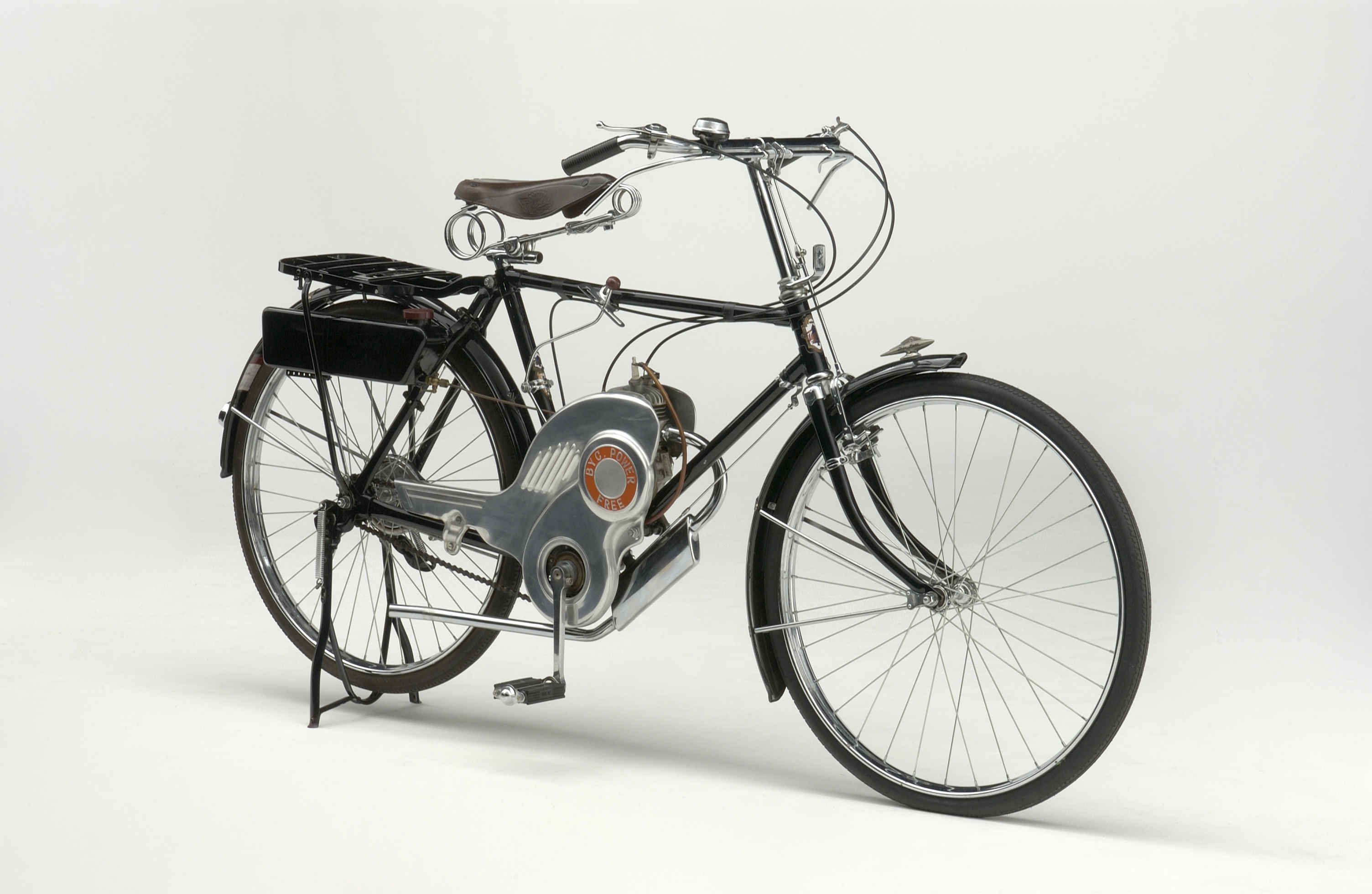
The year 1952 marks the true beginning of Suzuki as a motorcycle manufacturer, thanks to the revolutionary Power Free. This auxiliary bicycle engine was not just a product; it was the foundational model that propelled Suzuki into the two-wheeled market and paved the way for future legends.
Designed with a focus on efficient power delivery, the Power Free utilized a compact 36 cm³ 2-stroke air-cooled 1-cylinder engine, capable of generating 1 PS (brake horsepower) at 4,000 rpm. Suzuki engineers were so confident in their design that they obtained two patents for the system, reflecting their innovative approach to mobility.
Innovation extended beyond the engine block. The Power Free featured a sophisticated drivetrain, pairing the engine with a wet-type multiple-disc clutch and a 2-speed constant mesh transmission, alongside Suzuki's unique double sprocket wheels. The true testament to its engineering prowess came during development tests when the Power Free successfully conquered the challenging Hakone Pass without incident, showcasing its superb hill-climbing performance.
The success of this 6.0 kg engine laid the groundwork for Suzuki's rapid expansion. Its concepts were refined and scaled up, leading directly to subsequent successful models like the 1953 Diamond Free, which boosted displacement to 58 cm³ (2 PS), and the 1954 Mini Free, a model change of the Power Free that offered 1.8 PS from a 50 cm³ engine. The Power Free remains a cornerstone, representing the birth of Suzuki’s enduring legacy of performance and innovation in motorcycle manufacturing.


.jpg)
Comments
Post a Comment